 I grew up speaking Spanish, and because I know Spanish, I automatically know all the Latin root words. Latin is a dead language. It’s dead. Nobody speaks it. With the same amount of time you would use to study Latin, you can learn a language that you can use to communicate with other people. Millions of people, for example, speak Spanish.
At the risk of ticking people off (and the more you’re ticked off, the more it’s probably true), I would like to say that people who study Latin are snobs. Yep. Go on and throw tomatoes. I’m good at dodging.
Look, if you have a classical bent to your homeschool, you’re obviously a thinking person. You’ve chosen the most rigorous style of homeschooling, probably for the sake of your children having a better, higher education than you did. (I myself have a classical bent, since I was a literature major in college and was an English teacher for years. So don’t get mad that I don’t like the classical mind set, because this would not be true.)
All I’m saying is that the study of Latin is dreadfully boring. You’re punishing your children. Are you just checking off the boxes of what you should do for a classical education just to say you did it? Or worse, to boast about your children? Then refer to paragraph 2. (Ouch, that wasn’t a tomato. Keep reading. Maybe you’ll like me after all.)
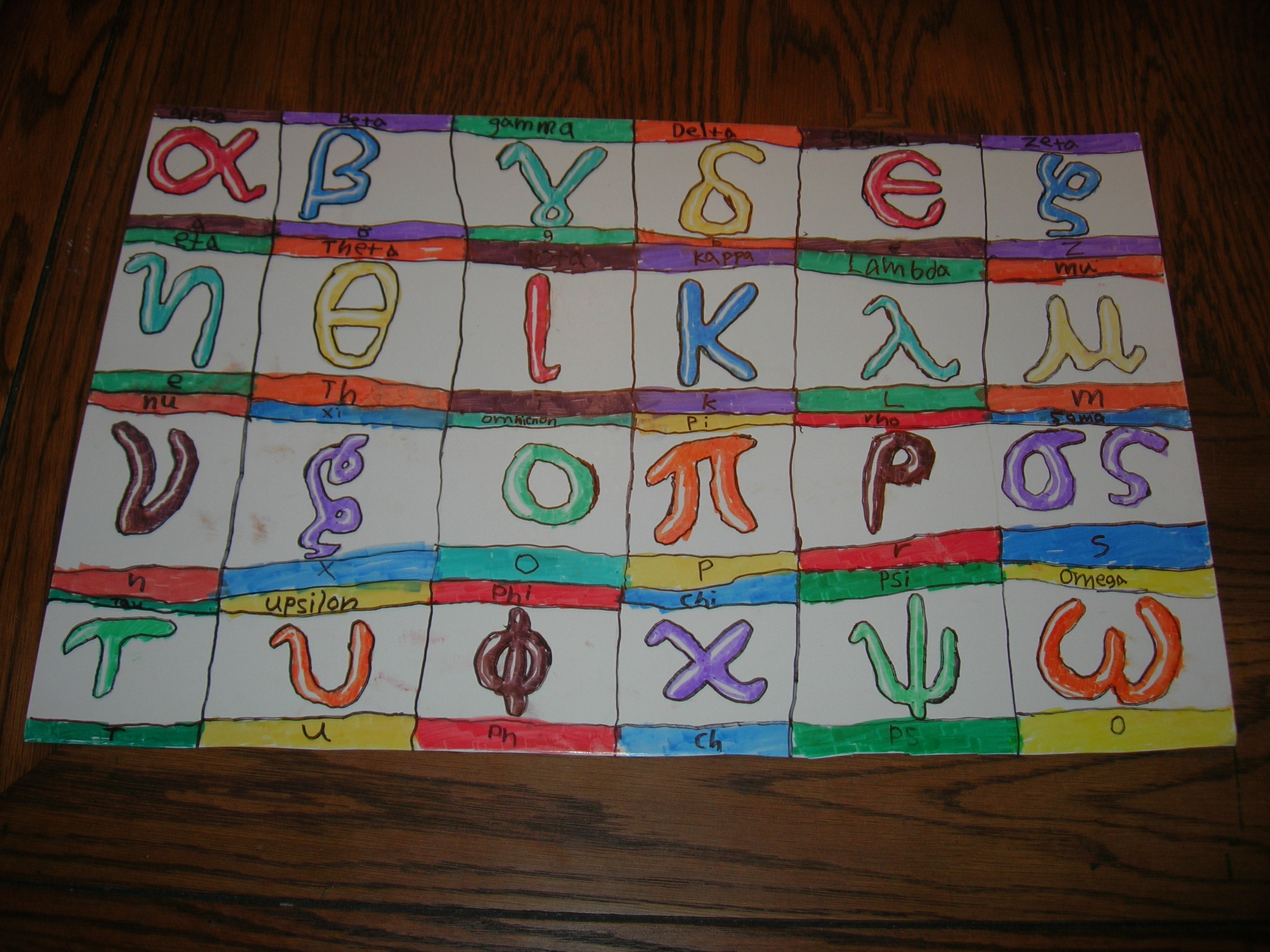
If you absolutely must study a classical language, choose Greek. At least with the study of Greek you can understand the Word of God better. Plus, the people of Greece actually speak Greek. I’ve been to Greece, and I’ve heard Greek being spoken. It’s definitely a live language. So, you see, I’m not dissing all classical languages, just the ones that have no practical use.
The bottom line is this: our time is precious and limited. Don’t you want the greatest amount of good done in the least amount of time? If you can actually learn the Latin roots while at the same time learning a real live language that is the second language of our country, why not do it?

Tags: Ancient Rome, classical, Homeschooling, languages, Latin, unit study





I am sorry you felt that Latin is boring. Many Latin programs are into the drill, drill, drill type of study, which I agree with you, is boring. However, my 13-year old son (and 19 year old daughter who has already graduated) love Latin. We don’t drill. We just do a lot of translation. He loves learning where the roots of our language come from. (BTW-They both study Greek as well.) My son will probably start a modern language as well in high school, but only if he wants to. With his foundation in Latin and Greek, he will be able to pick up any Indo-European language he wishes to in the future without too much difficulty. True, he could have gone at it from the other end and learned Spanish, say, and learned Latin if he wanted to, but I don’t think he would have enjoyed that path as well. True, there are some who learn Latin just to be snobs, but not all Latin learners are such. Careful about sterotyping too much. : )
I had so many comments, both good and bad, on the Homeschool Channel. It was almost like a formal debate. I think I opened a can of worms…
Many people think homeschoolers are snobs! Being a native Spanish speaker I would agree why teach Latin? Yet, I’m teaching Latin. It’s not really a big deal just songs to the Latin conjugations. But my husband wants me to teach classically so…
I’m so glad you weren’t offended, Esther! I read one of your blog entries about Latin class, and it was funny. My “Writing with Style” blog entry explains why I used the word “snob” (even though it was a generalization, I wanted to get a reaction so that people would re-evaluate why they were doing it.)
Yes I read some of the debate on the Homeschool Channel. You’re a hoot! My husband came home and told me that he heard Matt Freeman (?) on the radio talking about your anti-Latin post! I think it’s fun you’re getting all that attention…and I get to claim you as my bloggie friend! 🙂 Jason keeps telling me that I should blog for the Homeschool Channel, but I don’t really blog about homeschooling all that much…
I totally agree! (Okay, I haven’t had the chuzpah to each a language much at all) We’ve dabble in beginning Spanish, and I tried a certain classical vocabulary roots program (you know the one) which had my daughters crying in agony. Since then I haven’t ever been tempted to teach my kids Latin. Spanish is MUCH more useful! Or around here, even Russian would be something useful, considering Spokane’s enormous slavic population. And yes, I’ve found many “classical” homeschoolers who teach Latin are also snobbish about the whole thing. Aren’t we all homeschoolers? Thanks for speaking out what many of us have been thinking! 🙂
You seem to write like an intelligent individual, so I was a little surprised that you seem to imply that ancient Greek is spoken in modern Greece.
You also seem to imply that the only benefit to studying Latin is a knowledge of word roots. You don’t mention any others.
I can understand your desire to “rock the boat”, and perhaps it is needed, but I’m not sure that sacrificing accuracy is the appropriate way to get your point across.
you say that Greek isn’t spoken in Greece but this is what comes up on google
“The official language of Greece is Greek, spoken by 99% of the population.”
Ancient Greek is not spoken in Greece. Maybe Google means that Modern Greek is spoken now. If you did a little more research, it’d be easy to find that information out. Also, being a dead language has nothing to do with whether it’s spoken presently. It just means that the language is no longer being updated, which one could argue is not true because many communities (including the Vatican!) are continuing to put the language to contemporary uses.
How odd to suggest that Latin is of no practical use. Even more odd to suggest that those who teach it are snobs. But hey! I don’t mind being called a snob. LOL
My kids (3 and 6) absolutely love learning Latin. It is far from boring. If i was teaching my children Latin thinking they were going to require it in order to verbally communicate with somebody, then i would be crazy to do so. Latin is not taught for that reason, so it is strange to compare learning Latin with learning Spanish or French etc. Latin does however, make learning Spanish and other Italic languages far easier. It makes the learning of English easier too for that matter, aswell as all the other huge benefits of learning it which you appear to have totally overlooked. 🙂
don’t learn it if you don’t want but just because you don’t want to learn doesn’t mean people who learn latin are snobs…you are absolutely snob by saying that.
For those of you who did not read my follow-up article “Writing with Style,” my last paragraph explains why I wrote this comical attack on Latin:
“But the most important thing to me when writing this article was to stop people from making a decision based on sinful motivation. Not all classical homeschoolers have sinful motivation when choosing to study Latin. Some of them have thought about it and prayed about it, and studying Latin is the right decision for them. But after schmoozing with homeschoolers for a decade, I’ve seen that many (if not most) classical homeschoolers do Latin as a matter of pride. If I see sin, I will call people on their sin, so help me God, even if I lose sales. Even if I tick people off. I took a chance. I hurled myself off a cliff, so to speak, to see what would happen. And the result was better than I imagined. People are being set free from a weight of bondage that they thought they were under. And for this reason, I consider my article a success.”
We have been learning L&G for about 10 years now, and it is truly boring. It’s like calculus: you know you’ll never use it, it’s a huge waste of time. You’d rather jump in front of a bus. Until one day you find that you can read Latin and Greek in the original without a dictionary, and that you can figure out rare English words quickly from the L&G that you know, and that you intuitively know a lot about English that other English speakers cannot grasp. What a wonderful feeling. Some might call me a snob but I’ve bygod earned it! 😉
Discipulus Rusty S.P.D.
Actually you might need to use calculus. Vale!
I was horrible at math all through school, but had to take differential calculus in college. I had a struggle because of my poor math, but found it extremely interesting because it explained why and how things worked, something none of my math teachers had ever bothered with. I always needed to know how things worked, not be told “because” or told to just memorize them. I suppose the same thing could be said for Latin. I know I find it very interesting to study how words came into the language and evolved in meaning.
You use calc in Economics. And Physics. And just about anything that’s math-based.
I think that it is pointless learning it on its own but if you are learning it while learning Spanish or French then it is really useful. Do you agree?
Yes.
Kendra White (from the Homeschool Channel) says:
You have guts 🙂 I love it! No tomatoes from me. Though, I would like to hear a counter argument from some promising Latin studying families…
I answered:
LOL! I would LOVE to hear a rebuttal. Bring it on….
Hillary Reynolds (from the Homeschool Channel) says:
LOL-Susan, you rock!! Even a disagreeing, Latin-loving hs’er would have to appreciate your moxie!
I am actually freed by what you say. I have a classical bent to my homeschool approach, and was feeling guilt for ‘not getting around’ to the Latin part. My friends all tell me that by studying the roots their kids will be able to pick up many languages easily, but I have to wonder about that since I know a little spanish (more Texmex) and a little Italian, and while similar, the tenses are still different enough to need serious studying for fluency. Besides, what about these European countries where there kids speak 2-3 languages fluently at young ages? I haven’t heard any of them say it’s because of learning Latin, but rather just teaching it informally during younger years.
My husband’s thought is that if anyone’s going to take time to learn a second language, learn either Spanish or Mandarin because Spanish is the second most-widely used language in US, and because Mandarin is becoming the most-widely used language in the business realm.
Thanks for your gumption, Ma’am! I appreciate it greatly 🙂
Mary Friedman (from the Homeschool Channel) says:
Hey, ladies, as a proponent of Latin studies I would love to weigh in right now but probably won’t get around to it until later in the week. (I probably have a post on the topic of Latin somewhere on this [Homeschool Channel] site, in an earlier thread). Susan, I do agree that Greek is a great language to study. Our children actually do 2 years each of Latin, Greek, and Hebrew before they graduate high school. So no argument from me on that one! But I won’t throw any tomatoes! 😉
I replied:
I can’t wait to hear what you have to say, Mary. I was hoping someone would speak up. I love a good, friendly debate. Thanks for not throwing tomatoes!
Anne C. (from the Homeschool Channel) says:
We started studying Latin when my boys were little. We quit. Now though….realizing that our time is so short we would rather focus on Christian Worldview, Apologetics, American History, The constitution, Economics….computers..and Spanish because we are in California. In CA if you work for the state or County you can get a raise if you speak another language!! Not Latin though. 🙂
Our world is so insecure…so much is happening. I think we need to be very practical in light of the days in which we live. Good post and subject. I’m also looking forward to hearing from Mary and the others.
Brooke Preston (from the Homeschool Channel) says:
“Latin is a language as dead as dead can be. It killed the ancient Romans–and now it’s killing me”
As a Latin teacher, this is the number one phrase that I hear from kids entering my Latin 1 class. And honestly, it makes me laugh every time I hear one of them use it – laugh because I see the nervousness behind phrase. I think Latin is one of the only languages that comes with a reputation of dread – maybe something that carries over from the reputation of the ones who originally spoke the language. 😉
As I read your article, I notice three main arguments that I would like to address:
1. Studying Latin makes you a snob.
2. Studying Latin is boring, and therefore a punishment and should not be studied.
3. Studying Latin is a waste of time.
If you do not mean to sling tomatoes, then I would suggest not making this argument. If you have met people who studied Latin that were snobs, then I’m sorry that that was the representation of the language that you got. But no one appreciates being put in a box with a label on it. Any area of study comes with its snobs – musical snobs that say that only pure classical music should be listened to, literature snobs that say that any current fiction is sugar coated fluff that should be ignored, math or science snobs that believe their field to be the highest field of study there is, etc. No field is devoid of its share of snobs, but it does not follow that someone should be labeled as a snob simply for studying Latin. I teach roughly around 30-60 Latin students a year, and would love to introduce you to some non-snobbish kids, parents, and other teachers. I myself cringe at the thought of coming off as snobbish to anyone and definitely don’t look down on anyone simply because they haven’t studied Latin and I have. That would be unkind and not very Christ-like at all.
Boring. As someone who taught English, I’m laughing that you used this as an argument. ANY subject that a student doesn’t like has the potential to be boring and seen as a punishment. I am not a fan of math or chemistry myself and would rather have 8 Latin classes than have to take ONE of either of those. I remember my college English and Math professors starting off the semester with their speeches to those who were in the class because it was a general education class that they totally understood that more than likely they hated the subject and would try to make it as painless as possible. Liberal arts colleges exist though because they recognize that is more beneficial to the student to be well rounded in their knowledge than to just learn one area. But simply because an area is hard or hated by the student does not make it irrelevant. That argument would make every subject area irrelevant. The great thing about Latin though is it is optional! If a student doesn’t like Latin or can’t seem to master it, it isn’t the only language out there that they can study! Everyone needs to study another language, but I’ve noticed that people are good at different languages. Not everyone has the tongue to master Spanish, but can tackle something like Latin or ancient Greek. Granted, Latin is a rigorous language. There is a lot of memorizing and grammar rules, but I feel like whether or not it is “boring” is determined by the teacher. I am not doing my job properly if I cannot make the language come alive to my students. Even if they don’t like the language and are only there because their parents want them to be, I can make their time in my class enjoyable and lead them toward at least an appreciation. I don’t like math, but my college math professor did an amazing job of helping me to enjoy the class and get a lot out of it. She definitely was not a math snob. 🙂
As to the 3rd argument, I will point you toward Cheryl Lowe, writer of the Latina Christiana curriculum. She was three arguments as to why Latin is a good choice of study:
“First, Latin teaches English better than English teaches English. “The study of one’s own language,” says classicist Charles Bennett, “is achieved incomparably better by the indirect method of studying another language … It is because translation from Latin to English … is so helpful to the student who would attain mastery of his own language … that I find the full justification for the study of Latin.” In other words, education based on the study of the child’s own language is inferior to one based on Latin.
Second, the mental discipline Latin instills in students makes it the ideal foreign language to study. Latin originated with the Romans, and their character pervades the language they created. The Roman, says R. W. Livingstone, “disciplined his thought as he disciplined himself; his words are drilled as rigidly as were his legions, and march with the same regularity and precision.”
Latin is systematic, rigorous, analytic. Its sentences march “serried, steady, stately, massive, the heavy beat of its long syllables and predominant consonants reflecting the robust, determined, efficient temper” of the Romans themselves.
Latin is clearly superior to other languages in this regard. Like English, modern languages are “lax and individualistic,” reflecting the modern temper of those who speak them. Thinking that you can get the same benefit out of studying them is, in Livingstone’s words, “like supposing that the muscles can be developed by changing from one chair to the other.”
Third, Latin is the ideal tool for the transmission of cultural literacy. Latin is, in fact, the mother tongue of Western civilization—a language that incorporated the best ideas of the ancient Greeks, and which then, after the conversion of Rome, put them into the service of Christian truth.
Need a short answer? Mean Verbal SAT scores for 2006:
LATIN STUDENTS: 672
Spanish Students: 577
French Students: 637
German Students: 632
Hebrew Students: 623
Average for all other students: 503”
If you would like to read her article in full, you can find it here: http://www.memoriapress.com/articles/whylatin.html
I hope my comments (the book that they are) are helpful and empty of tomatoes. I respect your opinion, and hope that I have presented my thoughts in a respectful way. I’m not really looking to change your mind – arguing about something rarely accomplishes that – and I have studied Latin for too long to be swayed. I just wanted to represent another viewpoint. Spanish, Mandarin, and English are the main languages of our modern day world, but there is value in studying something that is ancient and formed many of the languages that we have today.
I replied:
I loved your highly articulated response. It shows that you have a logic that you’ve acquired, no doubt, from learning Latin.
“No field is devoid of its share of snobs.” I love it! So true! You prove my point.
I would love to study Latin from a teacher such as yourself, who actually loved the language. Unfortunately most homeschool students have to study Latin on their own with no help from their parents. This IS punishment, whether you would like to admit it or not. “Granted, Latin is a rigorous language,” you say. Because it is a rigorous language, I think it is unfair for parents to put that huge burden upon their sons and daughters when the parents aren’t willing to learn it themselves. And what homeschool parent has the time to do that? It’s just not practical.
As to Cheryl Lowe’s arguments, as pretty as they sound, they’re all bunk.
First, you don’t have to learn Latin to understand the anatomy of the English language better. Any language will do this for you, including Spanish, which has other advantages. Because I’m fluent in two modern languages, it was fairly easy for me to learn French and Greek as an adult (just for fun). I LOVE foreign language. I’ve traveled the world and used every bit of it. Latin, on the other hand, is way more useless than any other language. Unless a student is going into a field that requires it, it’s just plain mean to force a child through it.
Secondly, mental discipline can be achieved through the study of mathematics, higher science, logic, or even systematic theology of the Bible, for that matter. Who wants to be drilled rigidly as a legion of Roman soldiers? That’s supposed to be an argument in favor of studying Latin?
Thirdly, Latin has nothing to do with cultural literacy. Cultural literacy has to do with understanding the society in which we live, and the study of great literature would achieve that result better than the study of Latin.
If your statistics are correct on SAT scores, that is your best (and only) argument so far. But I’d like to see the statistics on the verbal scores of students who have enjoyed reading great literature. The scores might be even higher than the scores of the students who studied Latin. Another thing to keep in mind is that the students who study Latin also study great literature (because of the classical mind set), so who is to say that they didn’t score higher because of the literature?
Hi! I would like to add that the higher average SAT scores of Latin students may not have much to do with Latin. Elite high schools are typically the ones that offer Latin, and such schools market Latin as the academically superior language to study and push higher-achieving students to take it. I scored well on the entrance exam for my private Catholic school and my mom was seduced by the “Latin is sophisticated” sell and ended up with four useless years of Latin, plus another in college. Thus, the students who take Latin are already high academic achievers who score well on standardized tests before they ever learn a word of Latin.
I watched with envy as my friends who’d taken Spanish or French were able to hold actual conversations with people in their languages. I deeply regret wasting my time – especially formative time when my mind was more malleable and I could have learned Spanish more easily – with Latin, and now am struggling to learn Spanish as an adult.
Good point!
Caitlin Walsh (from the Homeschool Channel) says:
As a Latin 4 student (I am now in my fifth year studying this “dead” language), I must admit my surprise at your generalizing declaration that “people who study Latin are snobs.” I’ve been called many things in my life – not all of them flattering! – but never have I been called a snob, and certainly not because of my classical education. Indeed, all the Latin students I have come in contact with over the course of my Latin education have been anything BUT snobs – kind, considerate, and very, VERY smart, but never snobby. As Ms. Preston pointed out, every field has its share of snobs. Rather than proving your point, this statement demolishes it. For, you claim that Latin students are necessarily snobby. But Ms. Preston points out that the Latin snobs of the world are not snobs because they study Latin any more than math snobs are snobs because they study math. Certainly you would disagree with a wide statement defaming math as a snobbish discipline because math snobs do exist. The same logic applies to the field of Latin. Perhaps homeschooling parents should spend less time editing their children’s education for fear of inherent elitism in foundational languages and more time ensuring that their children are models of the life of Christ, stalwart against the pressures to be rude that you say are brought on by the Latin language.
Your second claim is that Latin is boring – and I cannot completely disagree with you! The word I’ve often used to describe Latin might not be “boring,” but I’ve certainly found the words “challenging,” “difficult,” “stretching,” and “time-consuming” to be apt. But here I must disagree with most of my fellow teenagers and express my firm belief that students do not exist to be entertained. If my days were spent on subjects and activities that I did not sometimes find boring or challenging, I would be an expert at TV-watching and facebooking. I would also be an unbelievably shallow person. But because my parents have refused to allow me to stoop to society’s predisposition to adolescent mediocrity and have instead given me difficult subjects like Latin, and Calculus as a fifteen-year-old, and a history class based on primary sources, I know that I have improved as a human being through the perseverance and self-discipline these classes require.
Your responses to Ms. Lowe’s reasons for taking Latin left me puzzled. You say that Latin is not needed to learn the structure of the English language. I can’t help but disagree. Those have taken any Latin course likely understand how incredibly valuable the Latin language is in learning and understanding ALL the modern romance languages. Without Latin, Spanish, French, Italian, and even English would not exist today. For that legacy alone Latin deserves at least the consideration of today’s students and teachers. Remember that for hundreds of years Latin was the cornerstone of a well-rounded education, an education given to the likes of Sir Isaac Newton, who wrote his incredibly influential scientific publications in Latin. To ignore such a legacy because it is “boring” or replaceable is a discredit to the work and education of dozens of geniuses who have shaped our modern world. You then say that Latin is not necessary to develop a structured, rational mindset. As I mentioned previously, I am currently taking a very high form of mathematics; I am in my third year of rigorous science courses; I have studied traditional logic all five years of my homeschooled education; and I have been blessed by a thorough upbringing in a structured theological understanding of the Bible. None of these have compared to Latin in giving me a rational, structured mindset and thought process; I am indebted to the Latin language above all else for the way my mind operates, and for that alone this beautiful language has earned my lasting respect and appreciation. And while Latin IS no longer spoken today, it IS also the foundation for thousands of years of rich history – as Ms. Lowe pointed out in her third point – and should be remembered and studied to give us context for our twenty-first century culture.
I think it appropriate to end this too-long post with the first Latin phrase I ever learned: “Rident stolidi verba Latina.” Translation? “Fools laugh at the Latin language.”
God bless you!
Liz Bird (from the Homeschool Channel) says:
Dear whoever does not like Latin: I LOVE Latin and I love Greek. I have studied German and grew up in a German household. There is no such think as a “dead language” unless you attempt to go to the country of Latin and speak Latin. Then, the only thing wrong is that you could be blamed for being parochial and narrow minded for defining a language as a discipline that is primarily for speaking. Languages are NOT Primarily for speaking — but a combination of speaking, reading and writing. Latin is very useful and I have often expected my students, private, public and home school to have a year of it prior to any modern romance or non-romance language. Many of us Latin teachers teach more than one language and I cannot begin to tell you how many of my former Latin students have e-mailed me over the years to thank me for Latin. I have had Spanish and French natives, pre-med students, students who simply love the study of anything ancient for its own sake. Many people feel that even in our time os utilitarian leanings where if you can’t eat it, wear it, or spend it, it has no time, place, use, value in our society, Latin has a place. And of course, some people just like it and we are proud of being called “elite.” I just smile, polish off my “I am elite” button, and wear it with pride. The difference between being a trained person and an educated person is often subtle and can be tinged with snobbery — it is tradition that Americans have inherited. We who revere education over training will always be considered a little snooty and elitist. Esto (so be it) But my Latin students are cut above and I am not afraid to stand behind them and cheer
Discipulus Susan S.P.D.
Pro di immortalis! I am a student and I like to learn Latin. I don’t think it is boring or a punishment. At my school, we cannot take Greek unless we take Latin. Yes. I am not home schooled. I do not think studying Latin is a waste of time. Even though it is a dead language, you might be surprised to know there are people who speak Latin. No. I am not one of them. People is plural! I can see your points you’re making, but I am still going to take Latin. Vale!
Amen Sue!
Unnless you are the Pope, an archaeologist, or Boris Johnson (our hilarious Mayor of London) you don’t *need* Latin. You might *want* to teach it to the childen, but it is not necessary.
If you want to learn the grammar of English, get an English grammar book. As Ruth Beechick points out, the grammar of Latin, overlaid onto English, creates inflexible ideas about splitting infinitives and so on.
My late father showed me how to find the root of a word in the Concise Oxford Dictionary when I was about ten or eleven. Needless to say, I was really disappointed that after two horrible years learning Latin verb tables and declining every blinkin’ part of speech, I had learned fewer words that I could have acquired in a week or two of recreational reading. I dropped Latin like a hot rock and pursued Chemistry to O-level standard. Now our children get to do experiments and I can expalin them a bit.
It is often said that Latin helps with etymology. I have a set of ‘Vocabulary from Classical Roots’, a Concise Oxford, a lovely copy of Roget’s Thesaurus and a ‘Brewer’s Phrase and Fable’. I plan for our children to learn about English by learning about, er, English. It seems a bit long-winded to spend ages on Latin, especially when lots of English words have roots that are Germanic, Greek, Indian …
People get offended because they have been to a LOT of trouble to decipher Latin textbooks as part of their home education, and they don’t like to think that it was not so vital after all.
Correction: “than I could have acquired”.
You didn’t tick me off, I just disagree. 🙂 I believe knowing Latin helps make learning modern languages simpler. I believe it helps increase vocabulary as well. Time will tell for us. My son enjoys it and I enjoy seeing him enjoy it.
My kids love studying Latin, it’s the one thing, they look forward to each day. They have learned so much this year, just from the Root-Wood Concept. They even made their own flashcards, without any prompting by me, I didn’t even mention it.
I hate latin. Its so stupid I would rather shoot myself in the mouth.
Any latin teacher thinks its stupid, even Mr Bloggs. Our latin teacher.
Alex… I’m on your side I can relate to you
The whole of Western civilization is of a classical mindset, it’s not just you. The point of studying Greek and Latin is so that you could read in them what everyone agrees are the peaks of cultural and literary achievement in Europe. No, it isn’t snobbish to want to better understand mankind. Yes, it is snobbish to want to better understand god (if you believe in such things). It used to be a rule before the world wars that the best education a writer can have is a classical one. It’s sad to now see you, a teacher at that, challenge this view. You seem to have faith in the wrong things.
I am a happy Latin snob who wholeheartedly believes that studying Latin is a blessing. Happy to disagree with you! I don’t really think that the reasons that you gave give a strong enough argument to not study it. I could say the same thing about cleaning the house, but I’m not going to give that up just yet.
People who have clean houses are snobs. Cleaning your house is boring and a punishment, therefore I shouldn’t do it. Cleaning the house is a waste of time…it’s just going to get dirty again. Ha! I’ll keep the Latin, but I just might stop cleaning!
Haha! I love your analogy to cleaning!
You have it all wrong. Latin is one of those courses that can help students understand a student’s current world. The ancient writers have given us so much that can aid in the understanding of other subject areas and could aid in learning many languages. Spanish is great too. Why would you feel the need to put down Latin? It is surviving around in many different forms, like Spanish. Latin does not have to be boring–there is over 2000 years of Latin literature that can teach so much. I have many students who love it so much that they take 5 or 6 years of Latin and have told me that what they have learned in my class has helped in their English, History, Science, etc. Just something to think about and maybe reconsider. It is about learning what is out there–the more you know will aid your future.
You’re missing the point of Latin entirely. I speak English, and I too can decipher the root words of Latin. (coincidence?…)
Your judgment of Latin pupils is an irony overload. I study Latin because I enjoy it. I now have a far better appreciation for other language structures being given the latin building blocks, than ever before. The goal of Latin is not fluency, but understanding the structure of language and its fluidity.
Spanish is beautiful language i agree but Why put down students of Latin language by calling them snobs? When was the last time a Latin student called you out on your exclusive Spanish learning ideals? YOU’RE the snob.
You think Latin is boring? No problem. Don’t study it. Not everyone likes the same thing. I dont like chemistry or calculus, but I’m not about to call for an end to it. Im rubbish at sport and definitely no good at drama, but others love it, so I would never be that selfish to dictate that they shouldn’t be allowed to pursue it just because I dont want to.
My favourite bit is when you referred to parents teaching Latin as “thinking people”. Are you NOT thinking when you’re teaching? That’s a worry. Oops, am I being snobbish?
Lastly, what are you on about with Greek being the Word of God? Do you have even the slightest grasp of Classics? Which “God” are you referring to? You do know there were TWELVE of them?
The New Testament was originally written in Greek. So a knowledge of Greek will help you know the original language of the Bible.
I have studied Latin just a little bit, and I think it is quite an inefficient language. I speak Korean and Japanese; in these languages we have separate helping words to put a case to a noun. For example, you just attach “wo” to make a noun accusative. Yes, just a single word. No declension groups, no gender, no number, no irregularities. Simple and easy to learn. In Latin, there are 3 genders and 5 declension groups,and number. It seems to take a lot of time just to memorise the grammar rules, which are not even inherently necessary. I mean, why does a ‘table’ have to be a female?
But on the other hand, we do not go fishing because catching fish is more efficient than buying fish from a supermarket. Getting fish to eat is rather an added bonus of fishing, not the primary reason for most people who live in cities. So, if one likes to learn Latin, learning Latin is not a waste of time. There are quite a lot of added bonuses, I think. Being a snob is also a bonus, if by that you mean feeling good about oneself. Mountain climbers climbs high mountains, not because it is easy or even useful. I think they do that to feel good about themselves for being able to do difficult things. So, if one learned this difficult laguage, why can’t one be as proud as a mountain climber on the peak of the Everest.
Being arrogant and looking down on other people who don’t study Latin for many of the reasons you just listed… Being arrogant like that is a sin. A prideful heart is not something that we should aspire to.
Wow, I regret so much the waste of time I spent with four years of high school Latin. I did very well, with a 4 on the AP exam. With that effort I could have learned much more French or Spanish. I seriously resent Latin being foisted on me and would never do it to my children.
If you really believe that Latin roots are important, and that Latin grammar is so beneficial because it is complicated, then learn two modern languages
1. Any living Romance language and
2. Any living Slavic language
Then you’ll also get the benefit of speaking two other living languages with which you can communicate with native speakers all over the world. For example, by learnging
1. Spanish or French
2. Russian
you would be able to communicate with another 2 billion people, versus Latin which has zero fluent speakers. Even if you picked less widely spoken languages like Italian and Polish, you’re still talking about millions of conversation partners and a huge amount of pop culture that you can access. That doesn’t exist in Latin. In fact, by comparison with living languages, the learning materials for Latin are horrible, boring and out of date.
I agree with you that learning greek we can understand word of God better… but do you think if one can read Greek NT and Septuagint means that s/he automatically can communicate with ppl from athens? surely no… I believe there are so much to learn as there are differences in biblical Greek and modern Greek.. okay, native Greek would say that they can read their koine greek bible, but thats a whole different thing as they are living the language.. not true happen with us who are second language learner..
but I also do agree to rule out option to make latin as a burden to those who do not have interest in it… buy if you want to learn greek even for just for reading NT or Septuagint, Latin would not hurt at all, I can speak from experience, Latin make my Greek bible reading smoother, because it gives me a solid understanding of inflection and bit of grammar that are similar in both language…
Great article and string. I agree with you about Spanish, mainly because of the ability to use it as a living language, which makes a huge difference in acquisition. I do the same with classical and biblical Greek. By the way, about 90% of Science vocabulary is derived from Greek and not Latin.
“At least with the study of Greek you can understand the Word of God better.”
Aaaaaaand with that, you’ve lost all intellectual credibility. Even if the “Word of God” were important, the Catholic church operates entirely in Latin.
That’s a good point, even though the Bible was originally written in Hebrew and Greek, both were translated into Latin. Most people in the Catholic church never understood what was being said because they didn’t know Latin. That’s why people like Tyndale translated the Bible into English, followed my many other translators translating the Bible into every language of the world (we are trying to, anyway!)
“At least with the study of Greek you can understand the Word of God better.”
I fully agree with this and I think it is a wonderful thing to read the New Testament (I assume that is what you meant) in Greek, but it is ridiculous to claim that it is all that is worth reading. There is such an incredible wealth of knowledge written in Latin that is just as much worth reading as any other great literature.
Also, learning Ancient Greek to read classical Greek texts would not enable you to speak to people in Greece, so in that sense, it is no more useful than Latin.
Good points.