Posts Tagged ‘Renaissance’

Renaissance Unit Study

Monday, September 10th, 2012

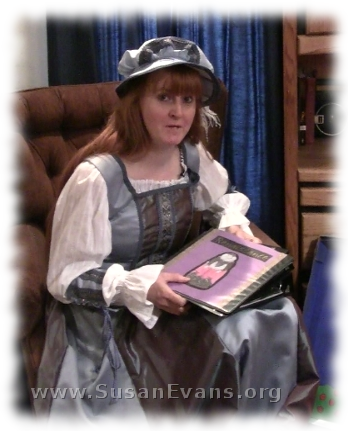
This is what we will be doing for our Renaissance Unit Study:

Share

My Sons’ Comments About Shakespeare

Thursday, August 30th, 2012

comments-about-shakespeareHere are some comments about Shakespeare my sons made to me recently:

“Mom?! How come you’re going so slowly? I can’t stand it! How on earth am I supposed to follow the action in the story if you take so long explaining one scene?” cried out my 10-year-old son Stephen.

“Sweetheart,” I answered, “you’ve already heard the plot of the story, and you’ve seen the play. Now we are going to read the actual Sharespearean language. I want you to understand the poetry of it, to savor the language. We are going to settle in and study one or two scenes per day. It will take a month for us to study this play. By the end of the year, after studying many plays, you will be able to understand any Shakespeare play that you’ve never read before just by reading the real thing.”

My 12-year-old son Bryan stated another observation about Shakespeare. “Mom, how come there are so many words in each scene? It seems like the characters could have said their lines in a much more simple and understandable way. Even in the play we saw, the action didn’t move forward very fast.”

“That’s because the language is poetic. It’s beautiful language, and your future wife is going to thank me for teaching you how to understand poetic language.”

My son Nathaniel asked, “Is that how Dad got you to marry him?”

“No,” I said, and we all laughed.

Share

Shakespeare in the Park

Wednesday, August 29th, 2012

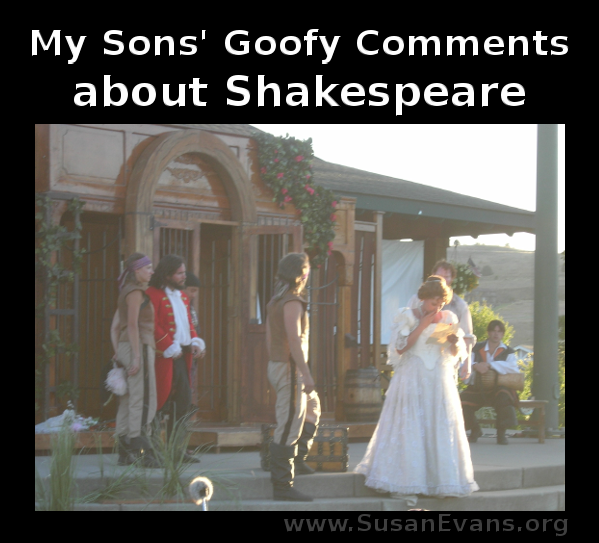
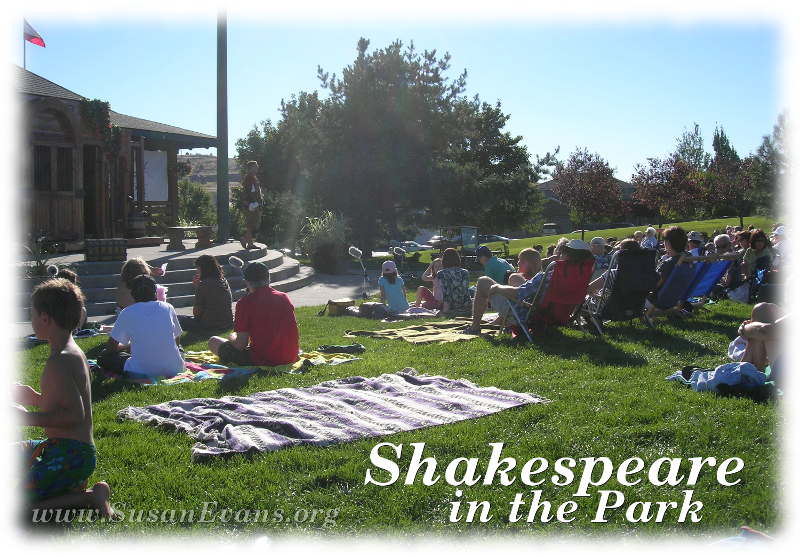
shakespeare-in-the-parkLast weekend we took our kids to see Shakespeare in the Park. This is an ideal way to introduce Shakespeare to children, because it is a casual environment that doesn’t require complete silence. Besides, kids can wiggle around on a blanket on the grass, changing positions, so even if your child has lots of energy, the child does not have to sit still. Shakespeare in the Park is usually free, so if you need to leave, you are not wasting any money.

On the way to the park, I told my children the plot of the story “Twelfth Night,” which was being performed that night. Twins are shipwrecked, and the girl thinks her twin brother has died. So she goes to work for the local duke. She dresses up as a boy in order to work for the duke, but she ends up falling in love with the duke. Meanwhile, the duke is in love with Olivia, who is in love with the duke’s page (who happens to be the girl dressed up as a boy). Suddenly the twin brother shows up and is mistaken for the sister who is dressed up as a boy. In the end, everyone is paired off and gets married. Yes, I told my kids that in Shakespeare’s comedies, there is always at least one love story, and couples always get married at the end. This is opposed to the tragedies, where lots of people are dead at the end. Yep. Comedy or tragedy. Married or dead. My kids laughed.

My kids seemed to follow their first Shakespeare play just fine. I told them they might not understand all the language, and just to pay attention to the plot. Also, I said that the language was similar to the King James version of the Bible. My 12-year-old son had no problem understanding the language, my two middle boys understood most of it, and my 7-year-old daughter said she couldn’t understand the words, but she enjoyed seeing the play. What a great kick-off to a full year of teaching Shakespeare to my children!

Share

Inventors Notebook

Thursday, July 12th, 2012

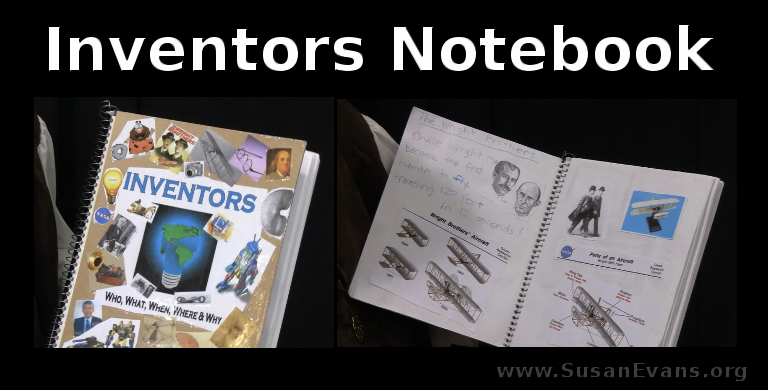
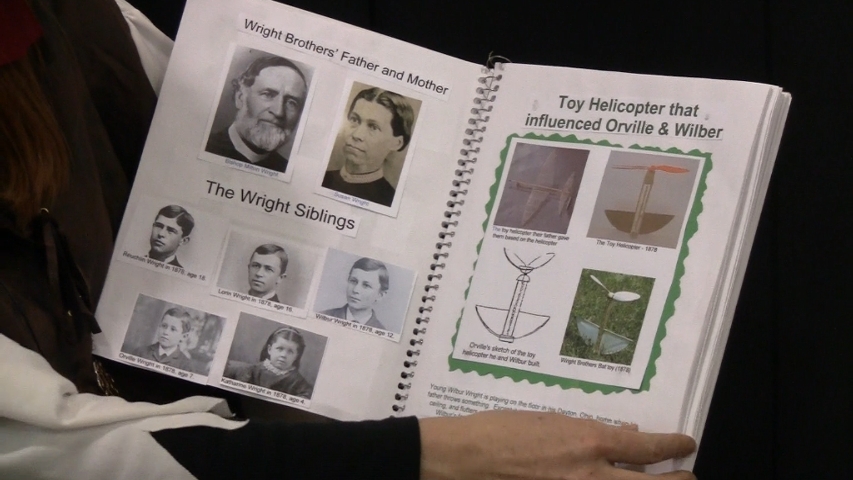
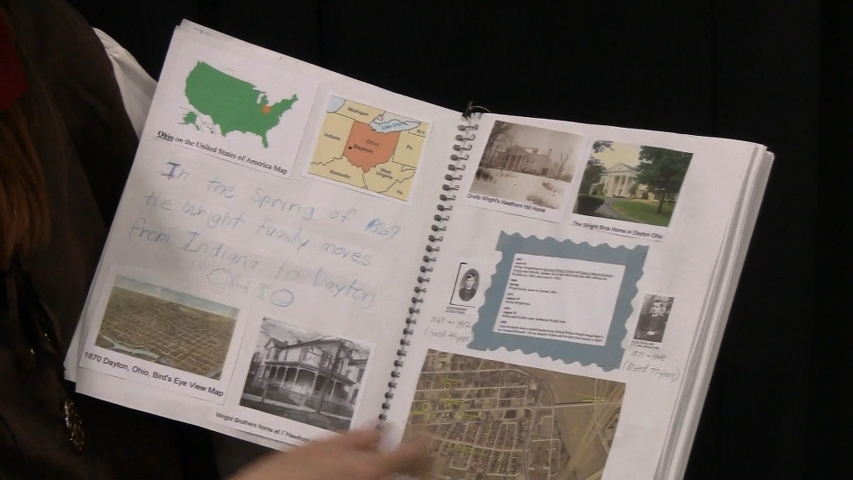
This Inventors Notebook has a decorated cover with cut-out pictures that were glued to the front. Then the front was covered with packing tape to make the notebook durable. The title is prominent in bold letters, and the description was “Who, What, When, Where, and Why.” A table of contents is written on the inside cover.

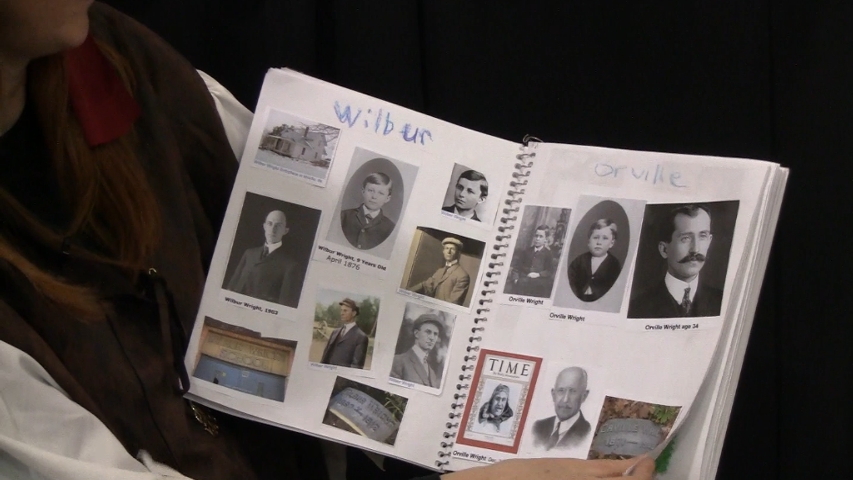
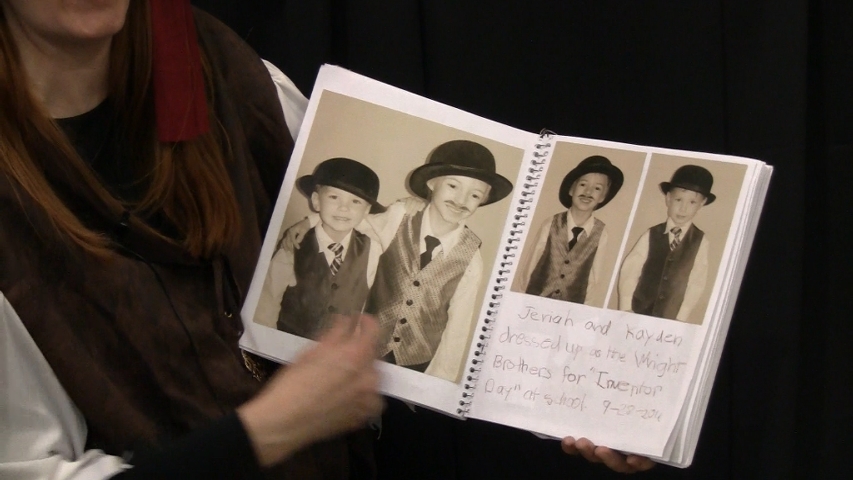
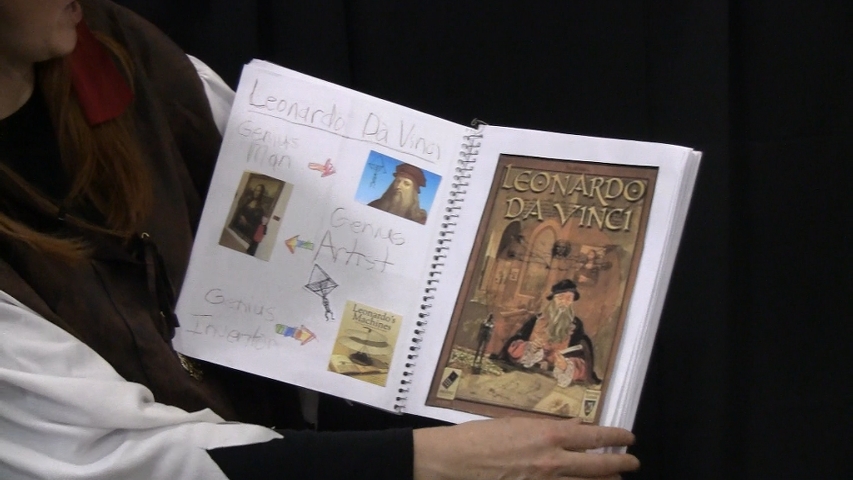
This notebook has lots of pictures, writing, timelines, science, history, costumes, and hands-on activities. This was a first-grade homeschooled boy who put together this notebook. He dressed up in a bowler hat to represent life back in the 1900′s, when most inventors were inventing their hearts out. You can make some of these inventions yourself for a hands-on activity. This family went to an art exhibit in our city; they saw life-sized Leonardo da Vinci contraptions everywhere that the kids could play with. Most of the inventions were put together with wood and canvas. The display was great! My own children enjoyed playing with the contraptions when we visited the museum.

This Inventors Notebook is a great example of a project book which displayed all the ideas about inventions that this boy was learning about in his homeschooling unit study on inventors. The homeschool mom was inspired to do this Inventors Notebook with her son after taking my Journaling class at the homeschool conference last year.


Share

The Reformation

Thursday, June 28th, 2012

the-reformationPart of teaching Renaissance history is learning about the Reformation. My husband and I listened to some Reformation sermons years ago before the kids were born, and we bought a set of six tapes. Yes, the church sold cassettes 15 years ago, even though no one uses them today. When we arrived at this point in history in our homeschooling, I whipped out the cassettes for my children to listen to. Only one of them got swallowed up in the cassette player and had to be thrown in the trash. It must have been the hundreds of sermons my children listened to back when we were at a family-integrated church, but my kids actually learned by listening to the Reformation sermons. They commented and wanted to discuss different issues, and they enjoyed the Gregorian chants.

For some reason, I didn’t feel like we had adequately covered the Reformation, so I was still looking for more materials about this event in history. While at a used curriculum sale, I found a boxed video curriculum of six half-hour programs on different major characters from the Reformation. This “Reformation Overview” came with a booklet with teacher’s notes and discussion questions. I forced myself to read all the teacher stuff so that I could accurately discuss the videos with my kids, but I did not use the discussion questions. We enjoyed the video, and I often paused the video to explain something like “indulgences.”

Before I put the first video in, my 8-year-old son asked, “Is this going to be boring?” I said, “I have no idea if it’s boring or not, but I want you to pay attention to it anyway.” Thankfully, the videos were actually interesting and moved at a good pace. They did not drag on or feel musty or like you had to force yourself to watch it. No, they were good. I never learned so much about the Reformation until I went through this program with my kids. The series includes John Wycliffe, John Huss, Martin Luther, John Calvin, the Anabaptists, and William Tyndale. It was actually enjoyable.

Since I only paid $5, I have no idea where normal people would buy it, so you can do your own search for “Reformation Overview.” I don’t care if you buy it or not, but I know someone will ask me who produces it. It’s Christian History Institute. Now that I think about it, this would be a good purchase for a larger homeschool group, who could get together for discussions. The discussion questions are really for high school students or adults, so it should be more free-form if you are teaching it to elementary kids. And you could have a Reformation Day at the end of a six-week study where everyone dresses up like Reformation people. Only make sure to tell the kids not to be nailing things into doors without permission…

Related Posts with Thumbnails
Share